Please search

Cold feet in bed: the main causes and remedies for a better night’s sleep
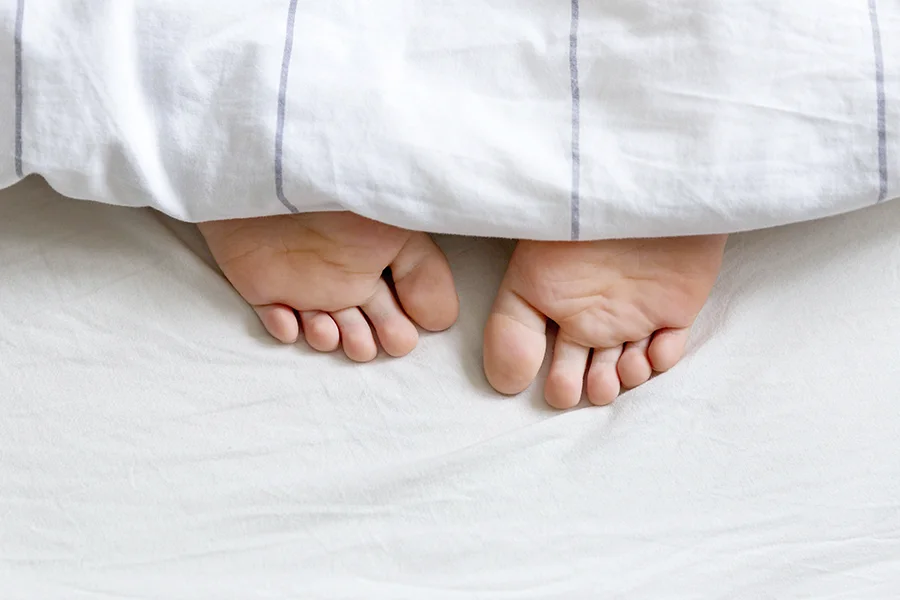
Do your feet stay cold even when you’re under the covers? We know how annoying it is, and how it can make it difficult to fall asleep.
For some people, this sensation can occur even in mild weather and affect the quality of their sleep. But where does this discomfort come from, and how can it be remedied without simply covering up more?
In this article, we will explore the most common causes of cold feet and the most effective remedies, as well as the role that your mattress and bed accessories can play in temperature regulation.
Why do feet get/stay cold in bed? The most common causes
Cold feet are not always just an environmental issue; they are often the result of a combination of internal factors and behaviours. Here are the most common reasons:
- Poor peripheral circulation: if blood struggles to reach the extremities (feet and hands), these parts will remain cold even if the rest of the body is warm. This may be due to poorly elastic veins, weak microcirculation or vasoconstriction.
- Hormonal and thyroid disorders: hormonal imbalances or thyroid dysfunction can alter the body’s thermoregulation, making it difficult to maintain a constant temperature.
- Raynaud’s syndrome: a vascular disorder that causes the hands and feet to react excessively to cold or stress by turning pale or purple.
- Anxiety, stress, or a hypersensitive nervous system can also be a factor. Stress can trigger peripheral vasoconstriction, reducing blood supply to the extremities.
- Neuropathies or diabetes: in cases where nerves do not conduct properly (or where there is sensory impairment), the extremities may feel colder than normal.
- The bedroom environment and unsuitable materials: sometimes, simply having a room that is too cool or using materials (such as sheets, blankets or socks) that are not breathable enough can exacerbate the sensation of cold.
Effective remedies for warming your feet and improving sleep
Here are a number of practical measures you can take right away to reduce the discomfort of cold feet at night:
- Lightweight or thermal socks: opt for merino wool, thermal cotton or technical materials that retain heat without overheating or stiffening your feet.
- Foot baths or evening massages: a foot bath in warm (not hot) water followed by a light massage activates circulation and prepares your feet for rest.
- Regular exercise and physical activity: an evening walk or light exercise stimulates peripheral circulation and reduces the problem over time.
- Diet and supplements (in moderation and only if recommended by a doctor): Foods rich in magnesium, vitamin B and natural nitrates (such as beetroot and spinach) can support circulation. Always consult a doctor before taking supplements.
- Stress reduction: breathing techniques, meditation, gentle yoga or progressive relaxation can help calm the nervous system and promote natural vasodilation.
- The right temperature and accessories:
– Keep the room temperature at around 16–19 °C.
– Use layered blankets that allow you to regulate the heat (e.g. a blanket and a light quilt).
– Avoid synthetic materials that do not allow air to circulate.
– Use a foot warmer or hot water bottle if necessary (take care to avoid direct contact).
The role of the mattress and bed accessories
It is often thought that the mattress only serves to support the spine. In reality, however, it can also play a significant role in regulating body temperature. Here’s how:
- Breathable materials and thermoregulating technologies (such as aerated foams, polyurethanes with air channels and technical textile coverings) allow for even heat dispersion and prevent cold spots.
- A mattress that is too firm or old accentuates the feeling of cold feet because it does not conform to the body’s curves and does not promote good microcirculation.
- In addition, protective covers such as breathable thermal mattress covers or topper pads made of thermoregulating materials can provide an effective ‘thermal buffer’ for those who suffer from this problem frequently.
- Finally, the bed base and mattress must facilitate ventilation; good air exchange under the bed’s surface helps maintain an even temperature. To ensure better temperature distribution, we integrate Air System technology into the band that runs around the entire outer edge of the mattress and on the underside, where it rests directly on the bed base or frame.
Warm feet, deep sleep… With Mollyflex!
Addressing the issue of cold feet in bed involves examining habits, the environment, materials, and (if necessary) physiological conditions.
Start by making small changes: choose breathable socks, adjust the temperature and evaluate the comfort of your mattress. If the discomfort persists, consult your doctor to rule out vascular or neurological causes.
If you are looking for a mattress that supports your thermal well-being too, contact us. Together, we will find the best solution for you — take the word of the Mollyflex sleep experts!
To provide the best experiences, we use technologies such as cookies to store and/or access device information. Consenting to these technologies will allow us to process data such as browsing behavior or unique IDs on this site. Refusing to consent or withdrawing consent may negatively impact some features and functions.