Please search

Is sleeping without a pillow good for you? Discover all the benefits and risks
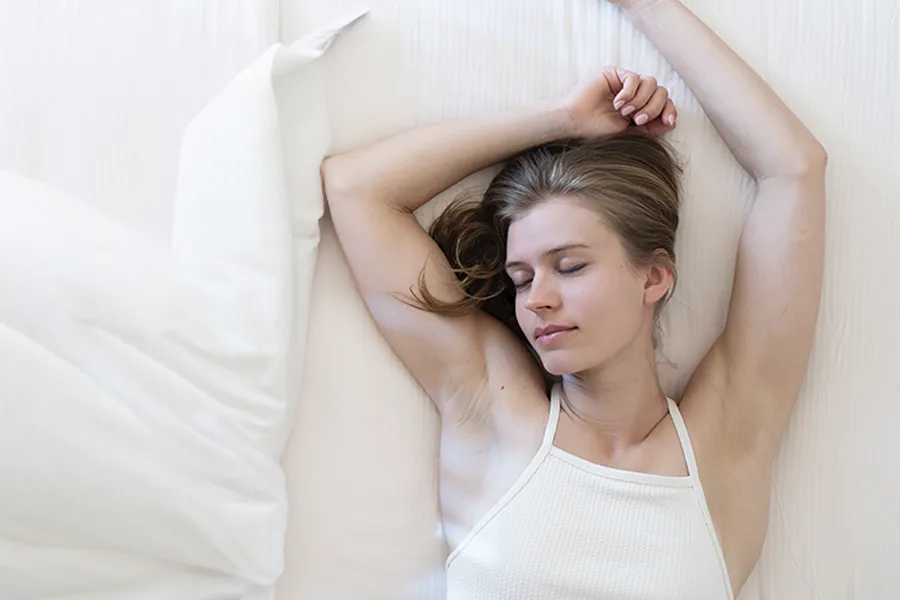
Sleeping without a pillow is a choice that divides sleep and wellness experts: while some believe that this habit is beneficial for posture and muscle relaxation, others point to possible discomfort such as neck pain or sleep disorders. But is it really healthy to sleep without a pillow? In this article we will analyse the pros and cons of this practice, helping you to understand whether it might be right for you or not.
The role of the pillow during sleep
The pillow is not just a decorative accessory for the bed: it performs a crucial function in supporting the neck and maintaining the alignment of the spine during sleep. A proper pillow reduces pressure on the cervical vertebrae and prevents muscle tension that can cause pain and stiffness upon waking.
That said, it is important to know that not everyone needs a pillow to get a good night’s sleep: some studies suggest that choosing to sleep without a pillow can be beneficial in specific circumstances, but it is important to consider the position in which you sleep and your physical needs.
Sleeping without a pillow: the advantages
But are there advantages to sleeping without a pillow
Yes, there are at least four and, as mentioned earlier, they are closely related to the position one takes during rest and one’s general health situation.
- Reducing neck tension
Sleeping without a pillow can help reduce tension in the neck muscles, especially if you sleep on your stomach. In this position, a pillow may force the neck to tilt unnaturally, causing pain when waking up. - Improved posture
Some people believe that sleeping without a pillow promotes a more natural alignment of the spine, especially for those who sleep on their backs. The absence of too high a support thus prevents hyperextension of the neck, contributing to a more correct posture. - Reduction of sleep wrinkles
When the face is not pressed against a pillow, the risk of developing pressure wrinkles on the face is reduced. - No pillow for infants and toddlers
For infants and very young children, sleeping without a pillow is recommended by paediatricians to reduce the risk of suffocation and to ensure a natural posture during sleep.
The risks of sleeping without a pillow
Now that we know the advantages of sleeping without a pillow and have contextualised them according to the positions assumed during sleep and the muscular-skeletal problems, let us look together at the risks associated with the absence of a pillow during sleep.
- Neck pain
Sleeping without a pillow may not be suitable for those who sleep on one side: in this set-up, the pillow is essential to fill the space between the head and the mattress, maintaining the alignment of the spine.
- Sleep disorders due to pillow habit
The absence of a pillow may cause discomfort for those who are used to using it, impairing the quality of rest and causing frequent waking at night. - Pressure on the face
Those who sleep on their stomach without a pillow may exert excessive pressure on their face and jaw, increasing the risk of muscle and joint pain in those areas. - Not a suitable choice for everyone
Every person has different needs and sleeping without a pillow may not be suitable for those with pre-existing conditions such as cervicalgia or other muscular/articular/postural problems.
When can one sleep without a pillow? How best to do it?
Sleeping without a pillow can be a good option in some specific situations:
- If you sleep on your stomach: this position in itself is not ideal for your spine, but the absence of a pillow can help reduce cervical tension.
- If you have an ergonomic mattress: a high-quality mattress can provide the necessary support for your neck and back, making a pillow unnecessary.
- If you have a sensitive face: the absence of a pillow eliminates direct pressure on the face, reducing the risk of skin irritation or temporary marks on the skin.
Do you belong to one of these categories? Would you like to try sleeping without a pillow?
I leave you with a few tips for gradually experimenting with pillowless sleep:
- Start with a very thin pillow: if you are used to a high pillow, try gradually reducing the height until you get to a pillow with minimal thickness.
- Choose the right mattress: an ergonomic, quality mattress can compensate for the lack of a pillow, providing good support for the spine.
- Listen to your body: if you experience pain or discomfort, it may be a sign that sleeping without a pillow is not ideal for you.
- Consult an expert: If you have doubts about your posture or suffer from neck disorders, it is advisable to seek the advice of a physiotherapist or orthopaedist.
Quality sleep (with or without pillow) starts with the right choices!
We can therefore conclude our reflection by saying that sleeping without a pillow is not necessarily better or worse: it all depends on your personal needs, the position you sleep in and the quality of your mattress. We have seen how for some people this choice can improve posture and reduce neck tension, while for others it could be a source of discomfort.
If you are looking for a pillow that suits your needs or want to improve the quality of your sleep, explore our range of mattresses and pillows, or contact us for a no-obligation consultation.
To provide the best experiences, we use technologies such as cookies to store and/or access device information. Consenting to these technologies will allow us to process data such as browsing behavior or unique IDs on this site. Refusing to consent or withdrawing consent may negatively impact some features and functions.